Build, ship, and maintain your software, together.
Summary
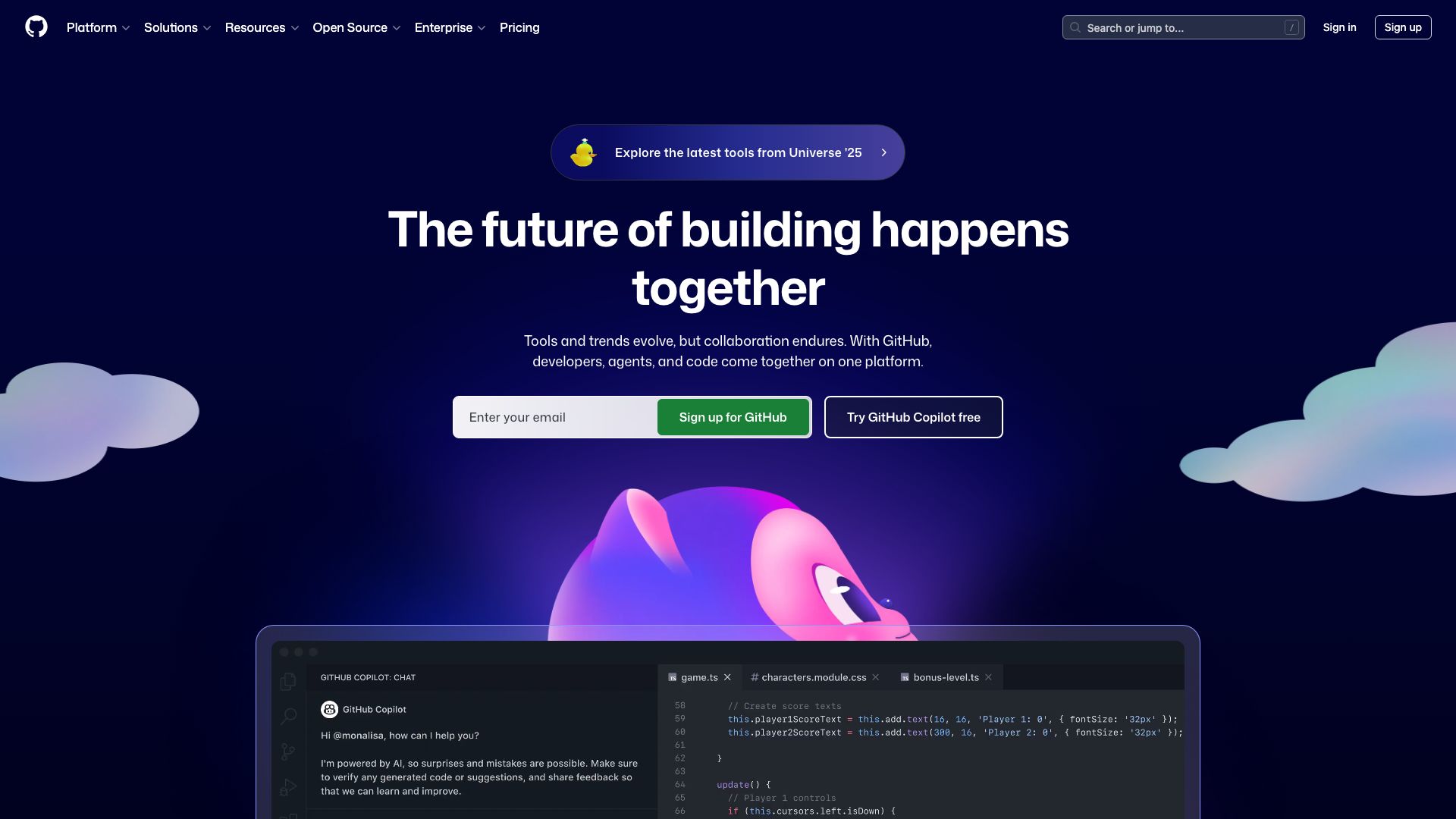
GitHub is a web-based platform that provides a collaborative environment for software development. It's built around Git, a distributed version control system, allowing developers to track changes in their code, revert to previous versions, and manage multiple lines of development simultaneously through branches. This makes it an essential tool for managing codebases of any size, from personal projects to large-scale enterprise applications.
Beyond version control, GitHub fosters collaboration by enabling teams to work together seamlessly. Developers can fork existing projects, propose changes through pull requests, and engage in discussions to review and refine code. This open and transparent process not only improves code quality but also accelerates development and encourages knowledge sharing within communities.
GitHub also serves as a central hub for hosting code repositories, making projects accessible and discoverable. It offers a range of tools and integrations to support the entire software development lifecycle, including issue tracking, project management boards, continuous integration and continuous delivery (CI/CD) pipelines, and secure code scanning. This comprehensive feature set makes GitHub a go-to destination for developers and organizations worldwide.
Key Features
- Version Control (Git)
- Code Hosting
- Collaboration Tools (Pull Requests, Code Reviews)
- Issue Tracking
- Project Management Boards
- CI/CD Integrations
- Wikis and Documentation
- Team Management
- Security Features (Code Scanning, Secret Detection)